META MAG

ShowBiz & Sports Celebs

Hot

Friday, February 20, 2026

Oregon Officials Declare Measles Outbreak, Say Known Cases Are ‘Just a Fraction of the True Number’ of Those Sickened

February 20, 2026
Oregon Officials Declare Measles Outbreak, Say Known Cases Are 'Just a Fraction of the True Number' of Those Sickened

The state of Oregon has declared an outbreak of measles, as wastewater surveillance confirms the presence of the virus

People Stock image of the measles rash. Getty

NEED TO KNOW

  • There are five confirmed cases, and "these cases likely represent just a fraction of the true number of measles cases," a health official said

  • The U.S. is seeing an ongoing spike in measles infections

The state of Oregon has declared ameaslesoutbreak, as the five confirmed cases are likely "a fraction" of the overall infections.

"Measles is here in Oregon and spreading in the United States," Howard Chiou, M.D., Ph.D., medical director for communicable diseases and immunizations at Oregon Health Authority's Public Health Division, said in aFeb. 19 statement, "and vaccination remains the best way for people to protect themselves. We encourage everyone to talk with a healthcare provider to ensure they and their families are fully protected."

Stock image of the Oregon state sign. Getty

The state has launched awastewater surveillance tool, which, at press time, showed low levels of the virus in some counties. As Chiou said, "It's really important to remember that these cases likely represent just a fraction of the true number of measles cases," perOregonLive.

Four of the five people sickened with measles were unvaccinated, theOHA says, and the vaccination status of the fifth person is unknown.

This is the seventh measles outbreak in 2026, per the U.S. Centers for Disease Control.As of Feb. 19, there have been 982 confirmed cases of the wildly contagious virus in the U.S. This includes a massive outbreak inSouth Carolina, which largely sickened children and left at least19 hospitalized.

Cases in the U.S. have spiked year over year. Last year, there were 2,281 confirmed cases of measles, with illnesses reported in 45 states. In 2024, there were 285 cases — a third of the cases the U.S. has seen just two months into this year.

Measles is extremely infectious. As Oregon health officials point out, the virus can linger in the air for up to two hours. Nine out of ten people exposed are likely to get sick if they aren't protected from the virus.

Advertisement

TheCDCsays, "Two doses of the MMR vaccine are recommended by doctors as the best way to protect against measles, mumps and rubella."

Stock image of the MMR vaccine. Getty

Never miss a story — sign up forPEOPLE's free daily newsletterto stay up-to-date on the best of what PEOPLE has to offer, from celebrity news to compelling human interest stories.

It's a two-shot series: The first dose is administered between 12 and 15 months of age and the second shot comes between 4 and 6 years.

Some adults may not remember getting the shots — or if they were born before 1957, traditional guidelines considered them immune. Measles was so widespread before the vaccine's introduction in 1963 that medical professionals assumed most people were exposed to it, resulting in some immunity.

The virus isn't "just a little rash," theCDCsays. Measles can also cause a high fever, cough, pneumonia, swelling of the brain (encephalitis) and death. The agency says one in five people with measles will be hospitalized, and one in 20 children will develop pneumonia, which it says is "the most common cause of death from measles in young children."

Read the original article onPeople

Read More

Cuba's health care system pushed to the brink by US fuel blockade, Cuban minister says

February 20, 2026
Cuba's health care system pushed to the brink by US fuel blockade, Cuban minister says

HAVANA (AP) — Cuba's debilitated health care system has been pushed to the brink of collapse by theU.S. blockading the country's oil supply, a Cuban official said Friday.

Associated Press People walk past a mural of Che Guevara in Havana, Tuesday, Feb. 17, 2026. (AP Photo/Ramon Espinosa) State-run bodega manager Roberto Roman carries bags of donated Mexican humanitarian assistance to be delivered to a family, in Havana, Cuba, Thursday, Feb. 19, 2026. (AP Photo/Ramon Espinosa) A man rides his bicycle at sunset in Havana, Wednesday, Feb. 18, 2026. (AP Photo/Ramon Espinosa)

Cuba Daily Life

The country's medical system was already perpetually crisis-stricken along with the island's economy, with lack of supplies, staff and medicine long being the norm. But the turmoil has reached a new extreme in recent weeks. Ambulances are struggling to find fuel to respond to emergencies.Persistent outageshave plagued deteriorated hospitals. Flights bringing vital supplies have been suspended as Cuba's government says it's now unable to refuel airplanes in its airports.

Experts and some leaders of other countries have warned that the island could be on the verge of a humanitarian crisis.

In an interview with The Associated Press, Cuba's Health Minister José Ángel Portal Miranda said that U.S. sanctions are no longer just crippling the island's economy, they're threatening "basic human safety."

"You cannot damage a state's economy without affecting its inhabitants," Portal said. "This situation could put lives at risk."

According to Portal, 5 million people in Cuba living with chronic illnesses will see their medications or treatments affected. This includes 16,000 cancer patients requiring radiotherapy and another 12,400 undergoing chemotherapy.

Cardiovascular care, orthopedics, oncology and treatment for critically ill patients who require electrical backup are among the most impacted areas, he said. Kidney disease treatments and emergency ambulance services have also been added to the list of impacted services.

The energy crisis Cuba has been grappling with for years entered new extremes last month whenU.S. President Donald Trumpsigned an executive order that would impose a tariff on any country that sells or provides oil to Cuba. It came just weeks after Trump deposed Venezuelan President Nicolás Maduro and announced no more Venezuelan oil would go to Cuba.

Cuba, which produces only 40% of its own fuel and largely depends on oil to power the island, has long relied on allies like Venezuela, Mexico and Russia to fill its energy deficit. But those shipments have now dried up.

Advertisement

Trump has openly said that his larger hope is to push regime change in Cuba by intensifying economic pressure on the island, which has already struggled to cope with decades of U.S. sanctions.

Cuban people — who the U.S. government has said it seeks to defend — are the ones feeling the harsh ripple effects of the U.S. fuel blockade as hardship mounts every day. Buses have slashed routes, gas has been put under strict rationing and is only being sold in foreign currency, and endemic blackouts have reached a new extreme.

"There's been a drastic change since January," said Aniliet Rodríguez, a 25-year-old pregnant woman who was admitted that month to a maternal care center for an extreme case of anemia. "There's no bread, no milk for nutrition … . There are no medicines."

Cuba's health care system follows a universal and free model, providing local clinics on nearly every block and state subsidized medicine. But it's also entered a state of crisis in recent years, especially since the COVID-19 pandemic. Thousands of doctors being paid state wages that can hardly afford them a carton of eggs have emigrated from the country and hospitals have rapidly deteriorated.

Medicine shortages have forced manyto buy them on the black market instead.

Such problems are expected to worsen in the coming weeks even though Cuba's government has struggled to adjust to the new reality, Portal said. Solar panels have been installed in clinics while authorities prioritize care to children and the elderly.

But he also said they have placed restrictions on some more energy-reliant technologies like CT scans and laboratory tests, noting doctors will have to rely on more basic methods to treat patients, effectively cutting many off from high levels of care.

"We are facing an energy siege with direct implications for the lives of Cubans, for the lives of Cuban families," Portal said.

Follow AP's coverage of Latin America and the Caribbean athttps://apnews.com/hub/latin-america

Read More

Jake Paul has second jaw surgery two months after bout

February 20, 2026
Jake Paul has second jaw surgery two months after bout

Jake Paul announced Friday over social media that he has undergone a second surgery on his jaw.

Field Level Media

The news comes about two months after the social media influencer-turned-boxer's sixth-round knockout loss to former two-time unified heavyweight champion Anthony Joshua.

Paul, 29, underwent surgery the day after the fight in Miami on Dec. 19.

"Had to get another jaw surgery," Paul wrote Friday on Instagram. "The screws and plates were coming loose because apparently I didn't rest for the past 2 months whaattttttttt."

Advertisement

In addition to photos and videos of himself in the hospital, Paul tried to have a little fun at his own expense with a few edited clips to depict a mechanical jaw. In one clip, he pretended to remove one side of his jaw.

Although he may not feel like it, Paul (12-2, 7 KOs) has reason to smile.

His fiancee Jutta Leerdam captured gold at the 2026 Milan Cortina Games by shattering an Olympic record in the women's 1000m speed skating event.

--Field Level Media

Read More

A quiet NASCAR owner risked it all in the antitrust lawsuit and came out on top

February 20, 2026
A quiet NASCAR owner risked it all in the antitrust lawsuit and came out on top

CHARLOTTE, N.C. (AP) —Bob Jenkinsrisked his entire race team — a Daytona 500-winning team — when he refused to signNASCAR'srevenue-sharing agreement and Front Row Motorsports joined 23XI in suing over antitrust violations.

Associated Press Front Row team owner Bob Jenkins stands near the driver meeting before the NASCAR Daytona 500 auto race at Daytona International Speedway, Sunday, Feb. 15, 2026, in Daytona Beach, Fla. (AP Photo/Nigel Cook) Noah Gragson, (4) moves during the NASCAR Daytona 500 auto race at Daytona International Speedway, Sunday, Feb. 15, 2026, in Daytona Beach, Fla. (AP Photo/Mike Stewart) Noah Gragson looks on prior to NASCAR's The Clash preseason auto race at Bowman Gray Stadium, Wednesday, Feb. 4, 2026, in Winston-Salem, N.C. (AP Photo/Matt Kelley) Riley Herbst, (35), Justin Allgaier, (40), Todd Gilliland, (34), John Hunter Nemechek, (42) and Ryan Blaney, (12) collide during the NASCAR Daytona 500 auto race at Daytona International Speedway, Sunday, Feb. 15, 2026, in Daytona Beach, Fla. (AP Photo/John Raoux)

NASCAR Daytona 500 Auto Racing

Michael Jordanwas the face of the suit settled in December, while Jenkins was the quiet team owner in the background presumed to be riding the global icon's coattails.

"People thought Michael Jordan was bankrolling this — no, no, no. I had to pay my half," Jenkins told The Associated Press.

Jenkins, the sole owner of Front Row, said he split the fees of the case equally with 23XI, which has three owners to divide the costs. Had NASCAR notsettled the suit, both teams would have ceased operations.

"And I was OK with that," Jenkins told The Associated Press. "It would have hurt, I risked losing three charters myself, but I would have been OK. I just felt that strongly that we had a winning case that I could risk it."

The settlement that was reached on the ninth day of the trial made the charters — the equivalent of a franchise in other sports — evergreen and that alone doubled their value overnight to nearly $100 million each.

Who is Front Row Motorsports?

For Jenkins, an entrepreneur from Tennessee who owns Long John Silver's, 400 Taco Bell franchises and about 30 KFC franchises, the settlement meant a racing organization that had been bleeding money was now secure to be passed down to his four sons. He testified during the trial that Front Row had lost approximately $100 million since it launched in the early 2000s and didn't turn a profit a single season — even in 2021 when Michael McDowell won the Daytona 500.

The settlement now allows Jenkins to look to the future with Front Row, which has one of the youngest lineups in NASCAR and opened the 2026 season with a victory when Chandler Smith won the Truck Series race at Daytona.

The Ford team fields Cup Series cars for Noah Gragson — who at 27 is the oldest driver in the lineup — Zane Smith (26) and Todd Gilliland (25). Jenkins believes he has a budding star in Smith, who signed a contract extension last October when the fate of the team was uncertain amidst the lawsuit. Smith won a stage in last week's Daytona 500 and finished sixth, and heads into this Sunday's race at Atlanta Motor Speedway ranked fourth in the Cup standings.

Gilliland and Gragson are in contract years and Jenkins said he's explicitly told both what he expects from them this season.

The two Front Row trucks are driven by Smith and Layne Riggs, who are both 23.

Advertisement

So the team has young drivers to develop, as well as an alliance with Team Penske. Jenkins said that partnership with Penske went soft during the lawsuit — Roger Penske signed the charter agreement presented to owners in 2024 that Front Row and 23XI refused to accept — but has amped up since the settlement.

What's next?

Front Row in the offseason hired engineer Grant Hutchens from Penske to crew chief Gragson, a move that allowed the team to move Drew Blickensderfer to competition director.

"Drew wanted more of an organizational, leadership role, and we always had that in the back of our mind, so Grant gave us an opportunity to fast-track that," explained Front Row general manager Jerry Freeze. "Bringing Grant in makes us a little more aligned with the Penske group and we hope that's hopefully going to pay off in the long run."

The settlement gave Front Row stability — Freeze said "it seems like a light switch went on with our relationship with Penske" — and relief to team employees who had worried their jobs might cease to exist. It also allows the team to search for new headquarters as Front Row is currently bursting at the seams across two different leased race shops, one owned by the late Greg Biffle and the other owned by Brad Keselowski.

Jenkins wants to consolidate his teams into one building and can now confidently make that investment.

A sense of satisfaction

Jenkins and Front Row don't get the same attention as mega teams Penske, Hendrick Motorsports or Joe Gibbs Racing. And he's a busy team owner with commitments to his fast-food empire that he takes a very hands-on role with. It was Jenkins who made the call for Long John Silver's to switch to waffle fries — a recipe he says the chain is still trying to perfect to prevent fries from getting soggy during third-party delivery — and he's often in the test kitchen sampling new recipes and vetoing a spicy shrimp idea because he didn't like the way the fish looked in a red sauce.

It made sense that Jordan, winning team owner of last week's Daytona 500, was willing to take on NASCAR in the revenue sharing dispute because racing is just his retirement hobby. But it took bravery and belief for Jenkins to sue — something the likes of Joe Gibbs, Rick Hendrick and Roger Penske did not do.

Jenkins doesn't need to be celebrated, but he's certainly pleased with the outcome for himself, his race teams and the future of NASCAR. It was a fight he thinks he's "probably stupid enough to have done myself" without 23XI, but knows having Jordan was necessary.

"Personally it's very gratifying because it could have went the other way, and this sounds cliche, but when something needs to be said, you've got to find a way to say it," Jenkins said. "We did that and it just makes me feel good that we took a stand."

AP auto racing:https://apnews.com/hub/auto-racing

Read More

The Biggest NFL Lawsuits of the Last Decade

February 20, 2026
The Biggest NFL Lawsuits of the Last Decade

The NFL generated more than $10 billion a year through much of the 2010s, and franchise values soared across the league. At the same time, it faced major lawsuits involving player safety, hiring discrimination, team relocations, and labor disputes. Several of these cases led to costly settlements and forced rule changes. Over the past decade, legal battles have shaped league policy almost as much as what happens on the field.

Stadium Talk

NFL Concussion Settlement

Credit: Wikimedia Commons

Brain injuries forced the NFL into one of the largest settlements in sports history. The league finalized a concussion settlement in 2016, creating lifetime compensation for retired players. More than 3,000 players or families filed claims linked to dementia or Parkinson's disease. Approved payouts passed $827 million by early 2022. The agreement remains uncapped under federal court supervision today.

Race Norming Concussion Lawsuit

Credit: Wikimedia Commons

Testing formulas once reduced compensation access for Black players seeking concussion settlement payouts. The NFL began using race-normed scoring adjustments during cognitive evaluations in 2013. Former players sued, claiming racial bias in medical calculations. The league removed race norming in October 2021. Hundreds of retired players had the chance to retest their cognitive results and qualify for larger settlement awards again.

Brian Flores Hiring Discrimination Lawsuit

Credit: Youtube

A text message mistake helped spark one of the most explosive employment lawsuits in league history. Brian Flores sued the NFL in February 2022, alleging racial discrimination in hiring practices. Data showed NFL rosters were over 70% Black while head coaches remained mostly White. The lawsuit challenges how teams conduct interviews under diversity-hiring rules across the league today.

St. Louis Rams Relocation Lawsuit

Credit: Youtube

Losing the team cost St. Louis nearly a billion dollars and triggered years of courtroom fights. The NFL paid $790 million in 2021 to settle relocation claims stemming from the Rams' 2016 move. The settlement prevented a public trial that could have exposed internal league emails and financial projections documents, as city officials argued that league relocation policies required honest negotiations.

Advertisement

Rams Fan Relocation Lawsuit

Credit: Wikimedia Commons

Fans rarely sue teams successfully, but St. Louis ticket holders forced a multi-million dollar payout. The Rams agreed to a $25 million settlement in January 2020 tied to relocation claims. Plaintiffs said team leadership suggested the franchise would stay locally. Lawsuit filings showed fans spent money on tickets and merchandise based on those public statements from ownership interviews years earlier.

NFL Painkiller Distribution Lawsuit

Credit: Canva

Painkiller distribution inside locker rooms became a legal flashpoint when retired players sued the NFL. The 2014 class action claimed teams ignored medical histories when providing medications. Players alleged addiction risk and organ damage tied to drug use. A federal judge dismissed the case in December 2021, citing statute of limitations rules tied to retirement timelines for former professional athletes.

Colin Kaepernick Collusion Grievance

Credit: Youtube

A starting quarterback losing his career created one of the most controversial grievances in modern sports. Colin Kaepernick filed a collusion grievance in 2017, claiming teams worked together to avoid signing him. The NFL reached a confidential settlement in 2019. The whole fiasco followed his 2016 protests during the national anthem, tied to police brutality debates across the United States, publicly.

Deflategate Legal Battle

Credit: Youtube

This case started as a dispute over underinflated footballs during the 2014 AFC Championship Game, and turned into a major legal fight over league authority. The NFL suspended Tom Brady for four games, citing violations of equipment rules. Brady appealed the decision in federal court, arguing the league overstepped its power. After nearly two seasons of legal back-and-forth, a federal appeals court reinstated the suspension in 2016, reinforcing the commissioner's disciplinary authority under the collective bargaining agreement.

Saints No Call Fan Lawsuits

Credit: Youtube

A missed penalty changed a playoff game and triggered lawsuits from furious fans. Saints supporters sued after a missed pass interference call during the 2019 NFC Championship Game. Courts dismissed most lawsuits because officiating decisions fall under league authority. The controversy pushed the NFL to temporarily expand replay review rules to include pass interference challenges for coaches and game officials.

Read More

ICE now says immigrant detainee died after 'spontaneous use of force'

February 20, 2026
ICE now says immigrant detainee died after 'spontaneous use of force'

Immigration and Customs Enforcement now says "use of force" was a factor in the death of an immigrant detainee.

Scripps News

Geraldo Lunas Campos died in January at the Camp East Montana for-profit detention center in El Paso, Texas.

The Department of Homeland Security said he died after attempting suicide, but a Scripps News investigation revealed Lunas Campos was in handcuffs moments before his death.

RELATED STORY |Photos and 911 calls deepen mystery of immigrant's sudden death in ICE custody

Advertisement

A county autopsy said the death was a result of homicide.

Now, a new document quietly posted by Immigration and Customs Enforcement says Lunas Campos died "after a spontaneous use of force" to prevent him from harming himself.

The statement does not elaborate on who exerted force against Lunas Campos. Scripps News has reached out to officials for more details.

The Camp East Montana detention center is the largest for-profit immigration lockup in the country and relies on the use of private security guards.

RELATED STORY |27-year-old man from Guatemala dies in ICE custody, DHS says

Read More

World leaders react as Supreme Court ruling strikes down Trump tariffs

February 20, 2026
World leaders react as Supreme Court ruling strikes down Trump tariffs

Some key world trade partners and national leaders embraced theSupreme Court's rulingon Feb. 20 thatPresident Donald Trumphas no authority to enforce sweeping globaltariffs.

USA TODAY

The high court's decision to strike down the president's signature economic policy was met with hopes that it would help lower costs globally, and also in the United States.

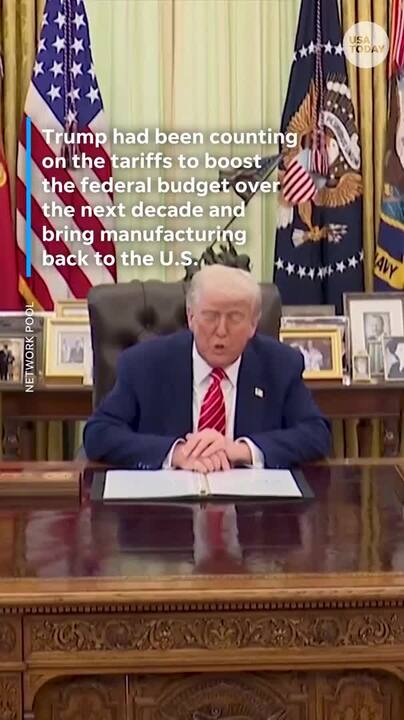
Trump said he was "deeply disappointed" with the high court's ruling. In response, the president said he would immediately impose 10% temporary tariffs to replace the emergency tariffs the court overturned.

Meanwhile, Dominic LeBlanc, Canada's top official in charge of U.S.-Canada trade matters, said ina lengthy Feb. 20 post on Xthat the Supreme Court's ruling "reinforces Canada's position that the IEEPA tariffs imposed by the United States are unjustified."

"Although Canada has concluded the best trade agreement with the United States among all its trading partners, we recognize that there is still much to be done to support Canadian businesses and workers who continue to be affected by the tariffs imposed under Section 232 on the steel, aluminum, and automotive sectors," LeBlanc said.

As a result of the ruling, the federal government would have to refund about $175 billion in tariffs that were collected without congressional authorization, according to a Feb. 20 projection bythe Penn Wharton Budget Modelat the University of Pennsylvania.

The Supreme Court ruled that Trump wasn't authorized to impose tariffs underIEEPA, the 1977 International Emergency Economic Powers Act. The emergency tariffs account for about half of what the government collects in tariffs.

"Unless replaced by another source, future tariff revenue collections will fall by half," the Penn Wharton Budget Model said.

The Penn Wharton report said that Customs and Border Patrol provides publictrade statistics, which are updated semi-regularly. The Penn report said CBP reported that it collected approximately $133.5 billion in tariffs under the IEEPA authority, according to its last update on Dec. 14.

Trump tariffs ruling live updates:Watch President Trump, others address Supreme Court setback

Canadian trade official supportsSCOTUSruling on tariffs

LeBlanc'spost on Xcomes two days after he'sreportedlyscheduled to meet with U.S. Trade Representative Jamieson Greer in Washington, "in the coming weeks" after a scheduled Canadian trade mission to Mexico.

LeBlanc's announcement also came after a phone call he had with Greer after the U.S. trade czar publicly mentioned potential barriers to bilateral trade talks, including issues regarding Canadian imports of American wine and spirits.

LeBlanc added in hisFeb. 20 X postthat Canada would still work to support businesses facing tariffs under other statutes that remain in place.

"As relations between Canada and the United States undergo a period of transformation and we approach the first joint review of the Canada-United States-Mexico Agreement, we are working to create growth and opportunities on both sides of the border, while strengthening our collaboration with reliable trading partners and allies around the world," LeBlanc said.

The U.S. Supreme Court as seen on a rainy Feb. 20, 2026, in Washington, DC. The Supreme Court struck down the legality of President Donald Trump's tariffs in a 6-3 ruling.

EU monitoring Trump, still wants low tariffs

The European Union said ina pair of postson X it is closely watching the Trump administration's next moves after the Supreme Court decided to strike down the president's tariffs.

"We take note of the ruling by the U.S. Supreme Court and are analysing it carefully," European Commission Deputy Chief Spokesperson Olof Gill said. "We remain in close contact with the U.S. Administration as we seek clarity on the steps they intend to take in response to this ruling," Gill said.

In a second post, Gill added, "Businesses on both sides of the Atlantic depend on stability and predictability in the trading relationship. We therefore continue to advocate for low tariffs and to work towards reducing them."

Separately, Bernd Lange, the chair of the EU parliament's international trade committee,wrote on Xthat the Supreme Court ruling was a "positive signal for the rule of law."

"Judges have shown that even (a) US president does not operate in a legal vacuum," Lange said.

Advertisement

He also wrote that "the era of unlimited, arbitrary tariffs" may soon "be coming to an end."

Lange said the European Union's parliament "must now carefully evaluate" the ruling and its consequences. He said the EU will hold an emergency meeting Feb. 23 regarding the trade deal Trump made with them last year "in order to assess possible implications."

The EU parliament has spent several months fully implementing the terms of the trade deal that would have lowered tariffs for U.S. and European businesses.

However, what the global leaders are publicly saying and doing privately may be two different matters, as Trump still wants to impose tariffs,Rob Lalka, a business professor at Tulane University, told USA TODAY.

"Although the Supreme Court is the law of the land, many of these tariffs are tied to other trade regulations and could be tied to other future actions taken by the White House and the administration," Lalka said. "It's important not to react to the final word, because I don't think it will be."

Lalka said world leaders and trade partners should breathe too much of a sigh of relief.

"Prices aren't going to go back to what they were before this, and the diplomatic relations aren't going become automatically restored overnight like a wild dream we woke up from," Lalka said. "America's reliability as a trade partner in terms of clarity and consistency won't be the same because nobody knows what tomorrow may bring."

US Chamber of Commerce hails Supreme Court decision

Despite possible murkiness, theU.S. Chamber of Commercesaw the Supreme Court's ruling as "welcome news for businesses and consumers."

"We encourage the administration to use this opportunity to reset overall tariff policy in a manner that will lead to greater economic growth, larger wage gains for workers, and lower costs for families," Neil Bradley, the chamber's chief policy officer, said in a statement. "Swift refunds of the impermissible tariffs will be meaningful for the more than 200,000 small business importers in this country and will help support stronger economic growth this year."

Bradley said the chamber has been working with small and midsize businesses nationwide that have seen significant cost increases and supply chain disruptions as a result of the tariffs. The group filed anamicus briefin the case on behalf of small businesses suing the Trump administration.

"We encourage the administration to use this opportunity to reset overall tariff policy in a manner that will lead to greater economic growth, larger wage gains for workers, and lower costs for families," Bradley said.

Gavin Newsom and Rand Paul poke Trump

CaliforniaGov. Gavin Newsom, a Trump nemesis and possible 2028 presidential candidate,reposted a post on Xfrom his press office's account, criticizing the president, and raised a probing question maybe on the minds of millions of Americans after the Supreme Court's tariff ruling.

"CALLED IT! Trump's tariffs were ILLEGAL from day one," the post said. "An unconstitutional tax — and now it's dead. WHEN IS TRUMP GOING TO REFUND EVERY DAY AMERICAN PEOPLE THE $1,700 HE ILLEGALLY TAXED THEM?"

Newsom, whospoke defiantly of Trump at the World Economic Forum in Davos, Switzerland,last month, later said ina separate X poston Feb. 20 that it is "Time to pay the piper, Donald."

"Your tariffs were nothing more than an illegal cash grab that drove up prices, hurt working families, and wrecked longstanding global alliances," Newsom said. "Every dollar your administration unlawfully took needs to be immediately refunded — with interest."

Meanwhile, RepublicanSen. Rand Paul of Kentucky, who occasionally pokes at the Trump adminstration, also said ina post on Xthat "the Supreme Court struck down using emergency powers to enact taxes."

"This ruling will also prevent a future President such as AOC from using emergency powers to enact socialism," Paul said.

In anotherX post, Paul said that the Supreme Court makes plain what should have been obvious. "The power to impose tariffs is 'very clearly a branch of the power to tax.'"

USA TODAY's Bart Jansen contributed

This article originally appeared on USA TODAY:Canada, Europe react to Supreme Court ruling on Trump tariffs

Read More